
Homeowner Guide
Home Elevator Installation in Wilmington, NC: 2026 Local Guide
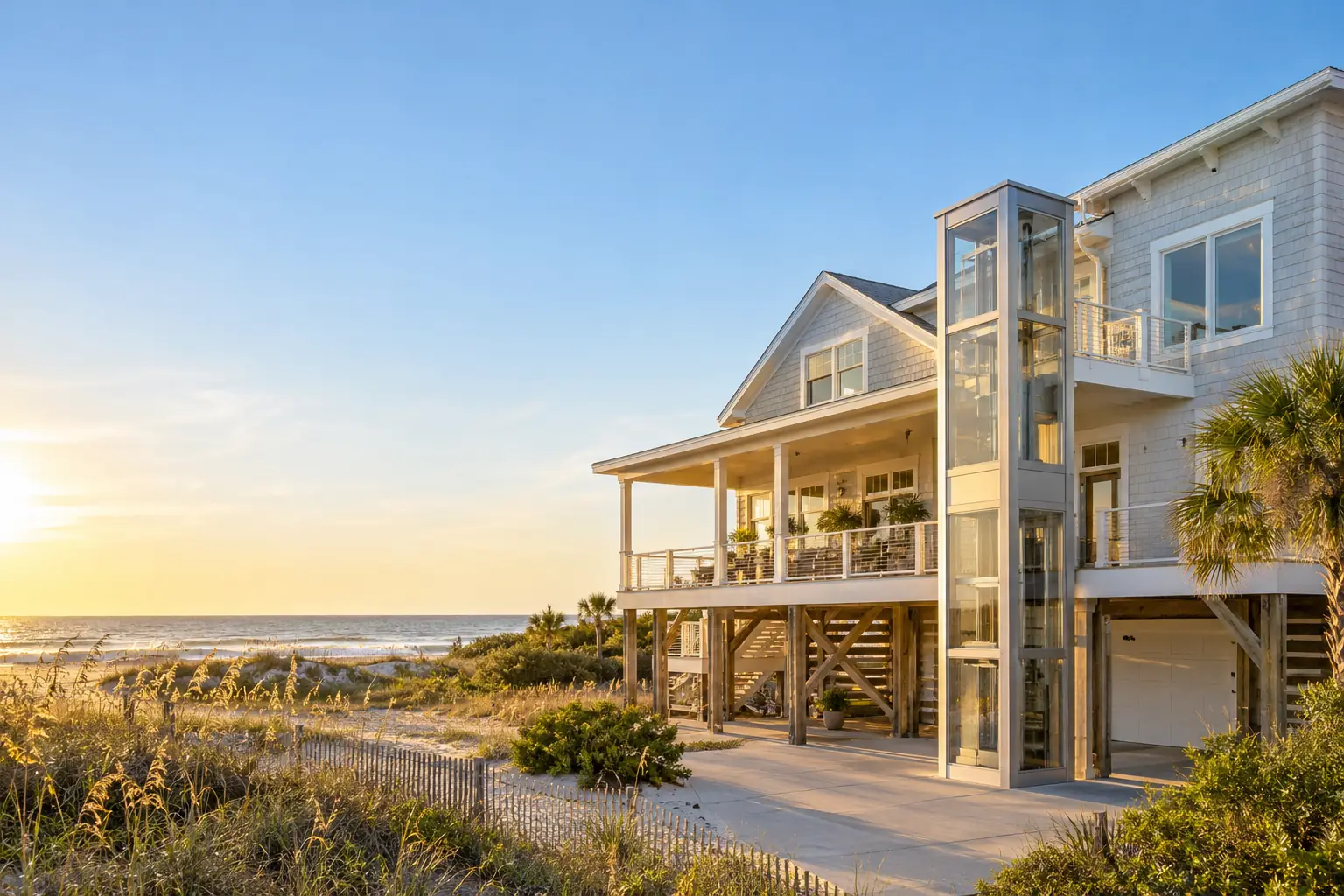
Home elevator installation in Wilmington, NC needs a building permit from the New Hanover County Department of Permits and Inspections, applied for through its COAST portal. Homes in flood zones need FEMA-compliant design such as float switches. Vacation rentals must meet North Carolina's 4-inch door-gap law. A two-story elevator typically costs $30,000 to $60,000 installed nationally.
Home elevator installation in Wilmington, NC usually means a building permit from New Hanover County, an installer who designs around local flood rules, and a budget of about $30,000 to $60,000 for a typical two-story home, based on national HomeGuide figures.
The process is mostly the same as anywhere in the US. Three local factors change it: flood zones, raised coastal homes, and a North Carolina law on elevators in vacation rentals. This guide walks through each step, what to budget, and what to ask before you sign.
You are not alone in looking. In Google Trends data we pulled for the last five years, the Wilmington, NC metro area showed the highest interest in home elevators of any US metro.
Who issues the permit for a home elevator in Wilmington?
The City of Wilmington says the New Hanover County Department of Permits and Inspections issues all building permits inside city limits. You or your installer apply online through COAST, the county's permitting portal, or in person at the county offices on Government Center Drive.
A few local points to check before work starts:
- Historic and overlay districts: the city requires a Certificate of Appropriateness for changes to buildings in local historic or overlay districts. That matters if an outdoor elevator tower will be visible from the street.
- Zoning: the city advises confirming zoning compliance before you apply for a building permit. Exterior towers can raise setback questions.
- Beach towns: towns such as Carolina Beach run their own building and zoning permit pages. Outside city limits, confirm which office handles your address.
Most installers pull the permit for you. Ask them to confirm it in writing and include the fee in the quote. Nationally, HomeGuide puts elevator permits at $300 to $2,000.
Does North Carolina inspect home elevators?
Not at the state level for a single-family home. North Carolina's Elevator and Amusement Device Safety Act states that it does not apply to devices in a single-family residence (G.S. 95-110.2). The state elevator bureau covers public buildings and workplaces instead.
Residential elevators are handled through the building code. North Carolina's Residential Code covers elevators and platform lifts in Section R321, enforced by local code officials. For your project, that means the county inspection at the end of the job is the key sign-off. Rules vary by jurisdiction, so confirm the inspection steps with the permit office.
What if the home is a vacation rental?
This is the local rule most guides miss. North Carolina Session Law 2023-68 applies to elevators in a private residence, cottage or similar accommodation subject to the state's accommodation tax, which generally covers short-term rentals. Since June 30, 2024, under G.S. 143-143.7:
- The gap between the landing door and the car door may not exceed 4 inches.
- The car door must pass a 75-pound force test without the gap growing past 4.75 inches.
- A landlord must stop a noncompliant elevator from operating until it is fixed, for example with a space guard or door baffle.
- The landlord must send the Commissioner of Insurance proof of compliance, such as an installer certification with photos.
- Knowingly letting a noncompliant elevator run is a Class 2 misdemeanor.
These rules follow the national safety change in ASME A17.1-2016, which cut the allowed door gap for residential elevators from 5 to 4 inches after child entrapment cases flagged by the CPSC.
If you plan to rent the home, even part of the year, tell every installer at the first visit. This is a summary, not legal advice. Check the current law and ask a local attorney if the home is a rental.
Installing an elevator in a flood zone or raised coastal home
Parts of the Wilmington area lie in mapped flood zones, and some coastal homes are raised on pilings. Look up your address on the FEMA Flood Map Service Center first. The zone shapes the design.
FEMA's Technical Bulletin 4 on elevator installation sets out the main rules for homes in Special Flood Hazard Areas. The base flood elevation (BFE) is the level floodwater is expected to reach in a major flood.
- Float switches: ASME A17.1 requires a float switch system, or one with equal safety, wherever the cab could descend below the BFE during a flood. It keeps the cab out of floodwater.
- Equipment height: controls and hydraulic pumps should sit above the BFE when possible.
- Insurance coverage: the NFIP does not cover elevator equipment below the lowest floor of elevated buildings built after the community joined the program, or equipment installed below the BFE after September 30, 1987.
- Premiums: in V zones, a shaft with walls around the cab counts as an obstruction. Shafts over 300 square feet with breakaway walls add a premium loading.
Ask your flood insurance agent how the elevator will affect your premium before you choose a design.
Indoor or outdoor elevator?
On a house raised on pilings, an indoor shaft must run through the ground-level enclosure. An outdoor tower attached to the side of the house is a common alternative.
Outdoor units face salt air, wind and rain, so ask each installer what corrosion-resistant finishes, weather sealing and service intervals they recommend for a coastal site. Searches for "outdoor home elevators" run at 1,000 to 10,000 a month nationally, so most installers will have done one.
How much does home elevator installation cost in Wilmington?
We could not find verified, published price data specific to Wilmington. The national figures below are a fair starting point. Coastal work, outdoor towers and flood-zone design can push a project toward the higher end (our estimate).
| Item | Typical national cost |
|---|---|
| Two-story elevator, installed | $30,000 to $60,000 (average about $48,000) |
| Each extra floor | $10,000 to $15,000 |
| Building permit | $300 to $2,000 |
| Dedicated electrical circuit | $250 to $900 |
| Electrical panel upgrade | $1,300 to $4,000 |
| Inspection | $150 to $700 |
| Stair lift, as an alternative | $2,000 to $15,000 |
All figures from HomeGuide's 2026 cost guide. For drive types and their prices, see our guide to home elevator types. For a line-by-line view of labor and construction, read the home elevator installation cost breakdown.
How the installation process works, step by step
- Flood zone check: look up your FEMA flood zone and BFE.
- In-home survey: the installer measures the spot, ceiling heights, pit depth options and electrical panel.
- Design and quote: get an itemized quote with the model, stops, construction, electrical, permit and flood-zone features as separate lines.
- Permit: the installer applies through New Hanover County's COAST portal, plus any historic district approval.
- Construction: framing, any pit work, and the electrical circuit by a licensed electrician.
- Installation and testing: rails, cab, doors and controls.
- Final inspection: county sign-off. For rentals, keep the paperwork for the state compliance filing.
Questions to ask a Wilmington elevator installer
- Will you pull the New Hanover County permit, and is the fee in the quote?
- How will you meet FEMA flood guidance for my zone, including float switches?
- Do the car and landing doors meet the 4-inch gap rule, with a space guard if needed?
- What finishes and service plan do you recommend for salt air?
- How quickly can a technician reach my address after a storm or a breakdown?
Next step: get local quotes
The fastest way to a real number is two or three itemized quotes from installers who work in New Hanover County and know the flood rules. You can get a local price from vetted installers on our guide page. For national context first, see our 2026 home elevator cost guide.
Frequently asked questions
Do I need a permit to install a home elevator in Wilmington, NC?
Yes. The City of Wilmington says the New Hanover County Department of Permits and Inspections issues all building permits inside city limits, through the COAST portal or in person. Homes in local historic or overlay districts may also need a Certificate of Appropriateness. Beach towns and areas outside city limits can have their own offices, so confirm for your address.
Does the NC Department of Labor inspect home elevators?
Not for single-family homes. The state's Elevator and Amusement Device Safety Act says it does not apply to devices in a single-family residence. Home elevators are covered by the NC Residential Code, Section R321, and checked through local building inspections. Rules vary by jurisdiction, so confirm the steps with your permit office.
What are the NC elevator rules for vacation rental homes?
Session Law 2023-68 covers elevators in private residences and cottages subject to North Carolina's accommodation tax. Since June 30, 2024, the door gap may not exceed 4 inches, landlords must stop noncompliant elevators until fixed, and proof of compliance goes to the Commissioner of Insurance. Check the current law with a local attorney if you rent the home.
Can I put an elevator in a home in a flood zone?
Yes. FEMA's Technical Bulletin 4 allows elevators in flood zones with protections. ASME A17.1 requires a float switch system where the cab could descend below the base flood elevation. Controls and pumps should sit above that level when possible. The elevator can also affect your flood insurance premium, so ask your agent before you finalize the design.
How long does home elevator installation take?
It depends on the type and the construction needed. Shaftless and pneumatic units can take a few days on site, while a traditional elevator with a new shaft and pit takes longer. In Wilmington, also allow time for the county permit, any historic district review and the final inspection. Ask each installer for a full timeline.

Get prices from a vetted local installer
Tell us about your home. We connect you with one licensed home elevator or stair lift installer in your area. No spam, no call centers.
Sources
- Building Permits, City of Wilmington
- Building and Zoning Permits, Town of Carolina Beach
- G.S. Chapter 95, Article 14A, Elevator and Amusement Device Safety Act
- Session Law 2023-68, North Carolina General Assembly
- NFIP Technical Bulletin 4: Elevator Installation, FEMA
- FEMA Flood Map Service Center
- Home Elevator Cost 2026, HomeGuide