
Homeowner Guide
How Much Does a Home Elevator Cost to Install? Full Breakdown
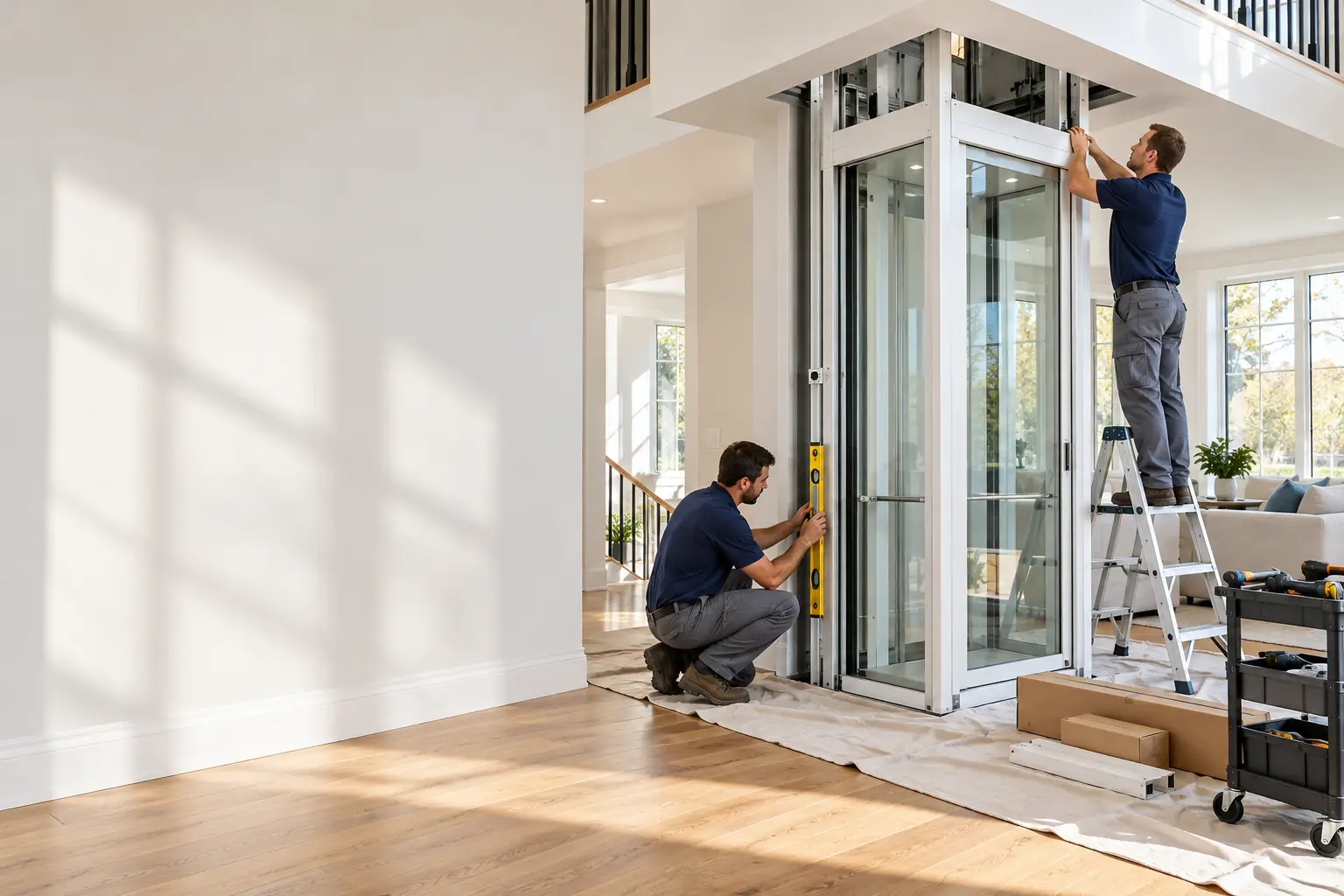
A home elevator costs $30,000 to $60,000 installed for two floors, with a national average near $48,000, according to HomeGuide. Equipment is only part of it. Shaft framing can add $7,000 to $15,000, electrical work $1,500 to $3,500 or more, plans and engineering $1,800 to $5,500, and permits a few hundred to a few thousand dollars. Each extra floor adds $10,000 to $15,000.
How much does a home elevator cost to install? For two floors, $30,000 to $60,000, and HomeGuide puts the national average at about $48,000, with jobs ranging from $20,000 to $100,000. The spread is wide because the elevator itself is only one line on the bill. The building work around it, the shaft, the wiring, the plans and the permits, decides whether you land near the bottom or the top of that range.
This guide breaks the installed price into the parts you will actually pay for, and shows which ones many quotes leave out. For prices by elevator type, see our 2026 home elevator price guide.
How much does a home elevator cost by type?
| Elevator type | Installed cost, two floors | Building work needed |
|---|---|---|
| Shaftless / through-floor | $30,000 to $50,000 | Floor opening, dedicated outlet |
| Traditional (hoistway) | $40,000 to $60,000 | Shaft, pit, sometimes a machine room |
| Pneumatic vacuum | $35,000 to $100,000 | Floor opening, no shaft or pit |
| Glass | $50,000 to $100,000+ | Usually a visible, open location |
Source: HomeGuide installed averages. Our guide to the six types of home elevators explains how each one works.
What goes into the installation price?
A full quote should cover the items below. The ranges come from HomeGuide and from Mobility123, a New Jersey installer that published a line-by-line breakdown of what elevator-only quotes tend to miss. Treat them as national guides; local labor rates move every line.
| Line item | Typical range | Notes |
|---|---|---|
| Elevator equipment and installation | Most of the total | The car, rails, drive, controls, doors and the elevator crew's labor |
| Shaft construction (framing, drywall, finish) | $7,000 to $15,000 | Shafted elevators only; Mobility123 estimates 40 to 80 hours of carpentry |
| Architectural plans and engineering | $1,800 to $5,500 | Load calculations and stamped drawings when the building department asks for them |
| Electrical work | $1,500 to $3,500 | Dedicated 220V circuit, often 30 to 40 amp, plus a phone line in the cab |
| Panel upgrade, if needed | $1,300 to $4,000 | Mobility123 says about a quarter of homes need one |
| Building permit | $300 to $2,000 | HomeGuide range; Angi puts New York permits at $1,000 to $5,000 |
| Moving pipes or ducts | $75 to $150 per hour | Plumber rates; one sample job included a $3,200 duct relocation |
| Change orders | $1,000 to $5,000+ | Surprises found once walls are open |
| Each extra floor | $10,000 to $15,000 | Beyond the standard two stops |
The costs many quotes leave out
The single most common budgeting mistake is comparing an equipment-and-install quote from one company with a turnkey quote from another. Mobility123 describes many elevator companies as quoting only the elevator, then leaving the homeowner to hire and manage the carpenter, electrician, engineer and permit process. It estimates that coordination at 40 to 60 hours of the homeowner's time.
Before you compare prices, ask every company to mark each of these as included or excluded:
- Shaft framing, drywall and finishing
- Structural reinforcement and engineering drawings
- New circuit, panel work and the in-cab phone connection
- Permit application, fees and inspections
- Door cutouts, trim and paint
- Moving plumbing, ducts or wiring that sits in the way
- Disposal and cleanup
- First-year service and the warranty terms
What makes an installation cost more or less?
Two homes can get very different quotes for the same elevator. HomeGuide lists the factors that move the price most:
- Available space. Stacked closets or an unused corner keep construction small. Moving a wall costs more, and HomeGuide puts new wall framing at $25 to $64 per linear foot.
- Number of floors. Most residential elevators serve two floors. Each additional stop adds $10,000 to $15,000.
- Door layout. A car with doors on two opposite sides costs more than one with a single door, though some floor plans need it.
- Door type. Manual gates and swing doors cost less than fully automatic sliding doors.
- Cab finishes. Paint and standard veneer are cheapest. Custom millwork, raised panels and glass push the price up.
- What is in the way. Plumbing, heating ducts or wiring inside the planned shaft must move, often at plumber rates of $75 to $150 an hour.
An existing house usually costs more than a new build, because a new home can include an elevator-ready closet stack and the wiring from day one.
Shaftless vs shafted: where the money goes
Shaftless and pneumatic elevators cost less to install mainly because they skip the shaft. HomeGuide says preparing a home for a traditional elevator takes four to five weeks on average, against one to three weeks for a shaftless model, and the elevator itself then takes four to seven days to install once the site is ready. Stiltz, for example, says its self-standing lifts run on a dedicated 220V, 15A outlet and are often installed in about a day.
That is why "shaftless home elevator cost" has become one of the fastest-rising elevator searches. Google Trends shows it up about 200%, and "home elevator installation" up about 60%.
A sample budget for a two-story retrofit
The table below is our illustration of how a traditional shafted retrofit can add up, built from the mid-points of the ranges above. It is an estimate for planning, not a quote.
| Item | Estimate |
|---|---|
| Elevator equipment and installation | $32,000 |
| Shaft framing and finishing | $11,000 |
| Plans and engineering | $3,500 |
| Electrical (circuit, no panel upgrade) | $2,500 |
| Permit and inspection | $1,500 |
| Contingency (about 7%) | $3,500 |
| Estimated total | $54,000 |
A shaftless model in the same house would skip most of the shaft and engineering lines, which is how many two-story installs land in the $30,000s.
Ongoing costs after installation
- Inspections: HomeGuide puts a home elevator inspection at $150 to $700, and most states require one every year.
- Maintenance: major manufacturers require scheduled servicing to keep the warranty valid.
- Insurance: your premium may rise, and HomeGuide warns that some policies only cover elevator claims when a qualified inspector checks it regularly. Keep the records.
Can you deduct a home elevator on your taxes?
Sometimes. IRS Publication 502 allows an elevator installed for medical care to count as a medical expense, but only the part of the cost that exceeds the increase in your home's value. The IRS example uses an $8,000 elevator that adds $4,400 of value, leaving $3,600 as the medical expense. Read Publication 502 and check with a tax professional, because the rules depend on your situation.
How to get an accurate price
- Measure the spot you have in mind and note what sits above and below it.
- Find your electrical panel's spare capacity, or ask an electrician to check it.
- Get at least three written quotes for similar models, each with the included and excluded list above.
- Ask each company who pulls the permit and who books the inspections.
- Never pay in full until the elevator has passed its inspection.
The fastest way to a real number is an in-home measure. Get a local price from a vetted installer who quotes the full job, not just the elevator.
Frequently asked questions
How much does it cost to install an elevator in an existing home?
Most two-story retrofits cost $30,000 to $60,000 installed, according to HomeGuide. Shaftless and pneumatic models sit at the lower end because they avoid building a shaft. A traditional elevator in an existing house can pass $50,000 once shaft framing at $7,000 to $15,000, engineering, electrical work and permits are added.
Does a home elevator need a permit?
In most places, yes. Residential elevators fall under the ASME A17.1 safety code, adopted by states and cities, and usually need a building permit plus inspections. HomeGuide puts permit costs at $300 to $2,000, and Angi cites $1,000 to $5,000 in New York. Ask your installer who applies for the permit.
What electrical service does a home elevator need?
It depends on the model. Many shafted elevators need a dedicated 220V circuit, often 30 to 40 amps, according to installer Mobility123, plus a phone line for the cab. Some shaftless lifts, such as Stiltz models, run on a dedicated 220V, 15A outlet. A dedicated circuit costs about $250 to $900; a panel upgrade $1,300 to $4,000.
How long does a home elevator installation take?
HomeGuide says the elevator itself takes four to seven days to install once the site is ready. Preparing the house takes four to five weeks on average for a traditional elevator and one to three weeks for a shaftless one. Permits and plan approvals can add weeks before work starts.
Does a home elevator add value to a house?
Often not enough to pay for itself. HomeGuide cites a National Association of Home Builders survey in which 56% of buyers said they would be unlikely to buy a home with an elevator. Value can be higher in areas with many older residents. Most people install one to stay in their home, not to resell.

Get prices from a vetted local installer
Tell us about your home. We connect you with one licensed home elevator or stair lift installer in your area. No spam, no call centers.