
Homeowner Guide
Small Home Elevator Cost in 2026: Smallest Models and Totals
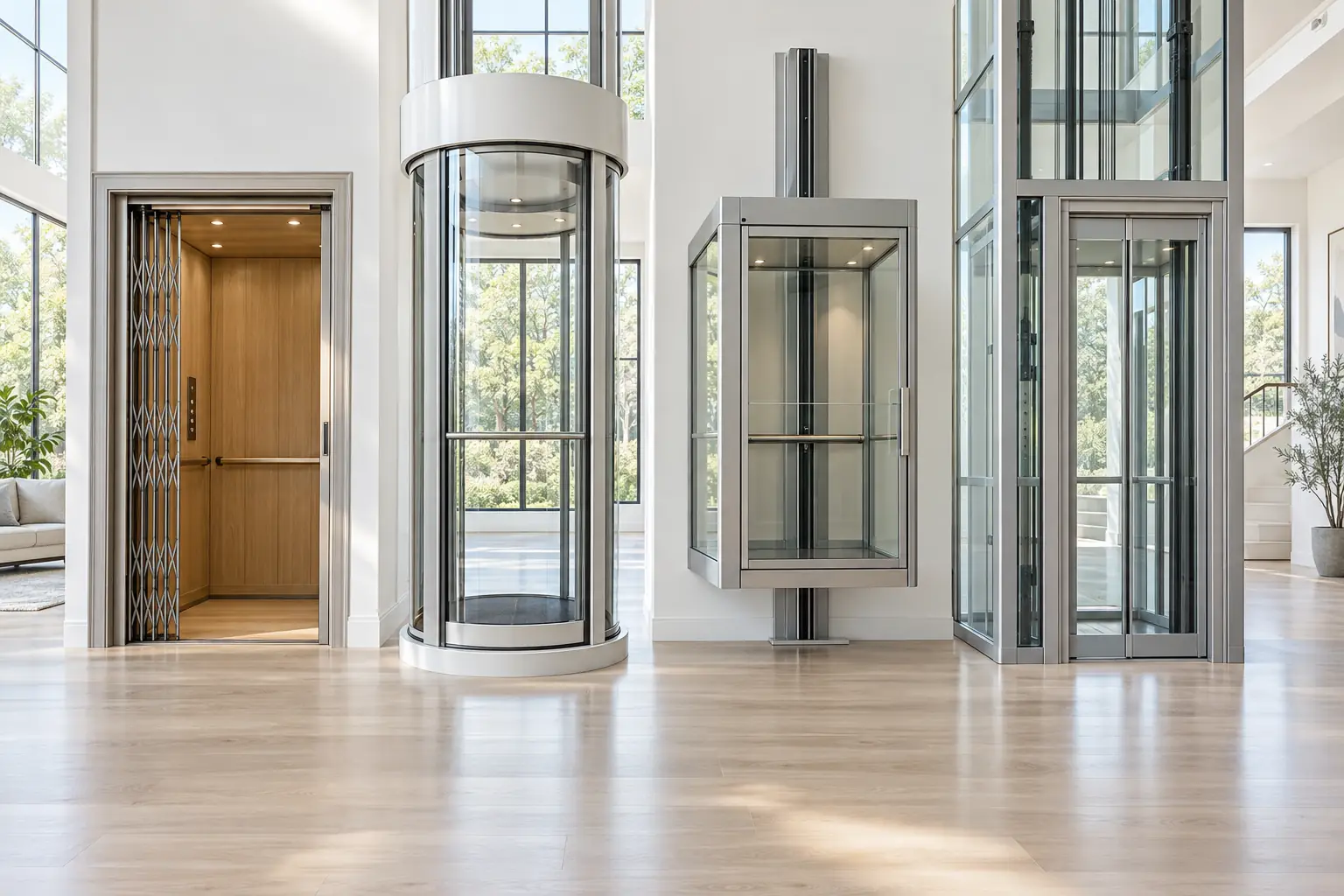
A small home elevator usually costs about $20,000 to $40,000 installed for two floors. Compact shaftless lifts like the Stiltz Duo start around $20,000 to $25,000, while Savaria quotes $30,000 to $40,000 for two-stop through-floor lifts. Small pneumatic tubes use less floor space but often cost $35,000 or more. Permits and electrical work add to the total.
A small home elevator usually costs about $20,000 to $40,000 installed for two floors. The low end is a compact shaftless lift such as the Stiltz Duo, which Retirement Living prices at roughly $20,000 to $25,000. Savaria puts its two-stop through-floor lifts at $30,000 to $40,000 installed. The smallest pneumatic tubes cost more, even though they take up less floor space.
This guide shows what each small model costs, how much room it needs, and the extra costs that turn a sticker price into a real total.
How much does a small home elevator cost?
Prices below are for two stops. Sources quote them differently. Some list the lift alone and others list a finished install, so read the source column before comparing rows.
| Small elevator option | Floor space | Capacity | Typical price |
|---|---|---|---|
| Stiltz Duo (shaftless, 2 people) | About 7 sq ft | 375 lb | $20,000 to $25,000 (Retirement Living) |
| Stiltz Trio (shaftless, wheelchair size) | Larger than the Duo | Wheelchair size | $30,000 to $35,000 (Retirement Living) |
| Shaftless elevators in general | Varies by model | Varies | $15,000 to $25,000 (Bob Vila) |
| Savaria through-floor lift | Varies by model | Varies | $30,000 to $40,000 installed (Savaria) |
| PVE30 pneumatic (1 person) | 30 in circle, about 5 sq ft | 350 lb | Pneumatic range $35,000 to $60,000 (Bob Vila) |
| PVE37 pneumatic (2 people) | 37 in circle, about 7.5 sq ft | 450 lb | Same pneumatic range |
Specs come from the Stiltz Duo Alta technical sheet and PVE model listings. Square footage for the tubes is our estimate from the listed diameters.
What counts as a small home elevator?
There is no official size class. In practice, people searching for a small home elevator want a lift that fits in a closet-sized corner, needs no built shaft and avoids a pit dug into the floor. Three designs fit that description.
- Shaftless (through-floor) lifts. The car rides on rails and passes through a hole cut in the ceiling. Most serve two floors. See how a shaftless elevator works.
- Pneumatic (vacuum) elevators. A round car moves inside a clear tube using air pressure. No pit or hoistway is needed.
- Compact hoistway elevators. A traditional elevator with a small cab. These need a framed shaft, so they are rarely the cheapest small option.
The Stiltz Duo Alta shows how small a shaftless model can get. Its outside car size is about 34 by 29 inches. It needs a floor cut-out of about 41 by 32 inches and travels up to about 14 feet 9 inches, which covers one floor.
Shaftless vs pneumatic: which small elevator costs less?
For most two-story homes, a shaftless lift costs less. Every source we checked puts shaftless models below pneumatic ones. Bob Vila lists shaftless at $15,000 to $25,000 and pneumatic at $35,000 to $60,000. Our shaftless elevator cost guide and pneumatic elevator cost guide break each one down further.
| Factor | Shaftless | Pneumatic |
|---|---|---|
| Typical price band | Lower | Higher |
| Smallest footprint | About 7 sq ft | About 5 sq ft |
| Floors served | Usually 2 | More than 2 on some models |
| Pit or shaft | None | None |
| Look | Enclosed box | Clear tube, visible from the room |
Pneumatic makes sense when you need more than two stops in a tight space, or when the floor area is truly tiny. If you only need one floor of travel, a shaftless lift usually gives more cabin for the money.
What adds to the total cost of a small elevator?
The lift price is only part of the bill. HomeGuide lists the common add-ons for home elevator projects. Small elevators avoid some of them, such as building a shaft, but most homes still need a few.
| Extra cost | Typical range | Needed for a small lift? |
|---|---|---|
| Building permit | $300 to $2,000 | Usually |
| Dedicated electrical circuit | $250 to $900 | Depends on model |
| Electrical panel upgrade | $1,300 to $4,000 | Only if the panel is full |
| Inspection | $150 to $700 | Depends on the state |
| Each extra floor | $10,000 to $15,000 | Only for 3+ stops |
All ranges come from HomeGuide's 2026 elevator cost guide. Stiltz says its lifts plug into a standard household outlet, which can remove the circuit cost. Ask before you assume.
Carpentry is the line most quotes handle differently. Cutting and framing the ceiling opening, moving ducts or wiring, and patching drywall may be in the quote or left to your own contractor. Ask every installer to list it.
A sample total (our estimate)
Here is a rough worked example for a compact shaftless lift. It uses the source ranges above and is an estimate, not a quote.
- Lift: $20,000 to $25,000 (Retirement Living range for the Stiltz Duo)
- Permit: $300 to $2,000
- Dedicated circuit, if required: $0 to $900
- Carpentry and finishing: priced by your contractor
That puts the total around $20,300 to $27,900 before carpentry. A wheelchair-size model, a panel upgrade or a third stop would push it higher. For a wider view of all elevator types, see our 2026 home elevator cost guide.
Why are more people searching for small home elevator cost?
Search interest is clearly moving toward compact models. Our review of Google Trends data for the US, pulled on October 9, 2026, showed these rising related searches:
- "small home elevator cost" up 150%
- "shaftless home elevator cost" up 200%
- "stiltz duo home elevator cost" up 250%
Stiltz brand searches were also up about 20% year over year. The pattern suggests more homeowners are pricing compact lifts as an alternative to a full shaft elevator.
Is a small elevator cheaper than a stair lift?
No. A stair lift is still the lowest-cost option for reaching a second floor. HomeGuide puts stair lifts at $2,000 to $15,000 installed, often in 2 to 8 hours. The trade-off is that a stair lift needs a rider who can sit and transfer, and it cannot carry a wheelchair, laundry baskets or a second person.
Can insurance or taxes help pay for a small elevator?
Help is limited. Savaria notes that Medicare usually does not pay for home elevators, though some grants and veterans' programs may apply. Rules vary by program and state.
On taxes, IRS Publication 502 lets an elevator installed for medical care count as a medical expense only for the cost above any increase in home value. In the IRS example, an $8,000 elevator that adds $4,400 in value leaves $3,600 as the medical expense. Check with a tax professional before you claim it.
How to get a real price for a small elevator
Measure the corner you have in mind and check what sits directly above it. Then ask at least two installers for a written quote that lists the lift, permit, electrical and carpentry as separate lines. That makes small-model quotes easy to compare. You can get a local price from a vetted installer in your area using the form on this page.
Frequently asked questions
What is the cheapest small home elevator?
Compact shaftless lifts are usually the cheapest true elevators. Bob Vila lists shaftless models at $15,000 to $25,000, and Retirement Living prices the two-person Stiltz Duo at about $20,000 to $25,000. Final cost depends on permits, electrical work and the carpentry needed to cut and frame the ceiling opening, so compare full written quotes.
How small can a home elevator be?
The one-person PVE30 pneumatic elevator is a 30-inch tube, about 5 square feet of floor space. The two-person Stiltz Duo Alta has an outside car size of about 34 by 29 inches, just under 7 square feet. Both skip the pit and shaft. Very small cabs carry one or two people and cannot fit a wheelchair.
Is a small elevator worth it compared to a stair lift?
It depends on what you need to move. A stair lift costs $2,000 to $15,000 installed, according to HomeGuide, and works well for one seated rider. A small elevator costs far more but carries two people, bags and laundry, and larger models fit a wheelchair. It also leaves the staircase clear for everyone else in the home.
Do small home elevators need a dedicated electrical circuit?
Some do and some do not. Stiltz says its home lifts plug into a standard household outlet. Pneumatic and traditional elevators often need their own circuit, which HomeGuide prices at $250 to $900. If your electrical panel has no free space, a panel upgrade can add $1,300 to $4,000. Ask each installer to confirm the power needs in writing.
Does a small home elevator add value to a house?
Usually not much. HomeGuide cites a National Association of Home Builders finding that 56% of buyers are unlikely to buy a home with an elevator. A compact lift is easier to live with than a large shaft, but most owners buy one for their own use. Plan the purchase around your needs rather than resale value.

Get prices from a vetted local installer
Tell us about your home. We connect you with one licensed home elevator or stair lift installer in your area. No spam, no call centers.
Sources
- Retirement Living: Stiltz Homelifts Review
- Savaria: How Much Is a Home Elevator?
- Bob Vila: Home Elevator Cost
- HomeGuide: Home Elevator Cost (2026)
- Stiltz Duo Alta Technical Specification
- Lifeway Mobility: PVE Vacuum Elevator models
- IRS Publication 502: Medical and Dental Expenses
- Google Trends: small home elevator cost (US)